Alec’s Dragon Image
Black BoxAlec’s Dragon Image is a shifting metaphor in the letters between Ilana Sommo and Alexander A. Gideon. It begins as a fantasy of rescue, turns into an accusation that Alexander is the danger he imagines himself fighting, and eventually expands into a figure for the destructive force shaping his relationships with Ilana and Boaz Gideon. Its reversals make the dragon less a stable emblem of villainy than a way to expose how desire, resentment, and fear change the roles the correspondents assign to each other.
From Rescuer to Dragon
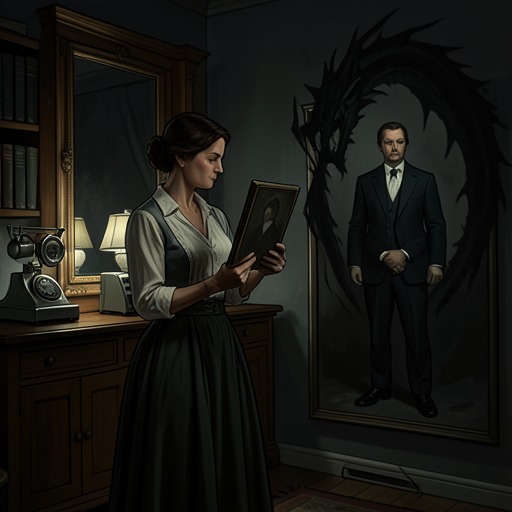
Ilana first frames Alexander through a fairy-tale scenario: a damsel sends a distant knight the sword with which he can slay a dragon and set her free. She imagines dressing him in a black robe and cowl, giving the fantasy a dark, theatrical aspect rather than presenting it as a straightforward appeal for rescue. The metaphor allows her to invite Alexander into an imagined role while hinting that the invitation itself carries danger and attraction.
The role reverses almost immediately. Ilana warns that the knight who has killed the dragon may turn on the damsel and then himself; she then names Alexander as the dragon. The sequence collapses the apparent distinction between rescuer and threat. He cannot simply wield the sword against an external monster, because the letter identifies him as the source of the violence within the fairy tale. The self-destruction in Ilana’s formulation makes the image more than an accusation against her former husband: it presents the supposed victory as ruinous for all three figures in the scene.
This reversal also gives the metaphor its irony. Alexander is addressed as the powerful knight, yet the story Ilana constructs denies him the moral clarity that role promises. The sword does not make him a liberator; it belongs to a drama in which the knight’s violence reaches the damsel and finally himself. By making the hero and monster the same person, the letter turns a familiar rescue plot into a portrait of entanglement, in which force cannot resolve the relationship it has helped to damage.
A Figure for Their Intimacy and Estrangement
The dragon image carries the force of a private relationship as well as a fairy-tale plot. Ilana’s letters address Alexander with a mixture of challenge, longing, and hostility. In the earlier passage, the imagined dragon-slaying is bound to the idea that the two former partners can still affect one another profoundly. In a later letter, she contrasts Alexander’s emotional hardness with the tenderness she attributes to Michel-Henri Sommo. The contrast makes the dragon a figure for what she experiences as Alexander’s inability to offer intimacy, rather than merely a label for an adversary.
Ilana also connects the accusation to the history of their separation. She says she had been prepared to continue their relationship and asks why Alexander divorced her, brought her into a shared darkness, and then left. Her description of him hiding in a black-and-white room makes withdrawal part of the dragon’s meaning: the monster is not only destructive but inaccessible. Yet her insistence that she still longs for the relationship complicates the accusation. The image registers attachment that has not been extinguished, even as it presents renewed closeness as bound up with pain and fear.
The metaphor does not leave Ilana outside the moral conflict. At the end of one letter, she describes both herself and Alexander as despicable and rotten, then sends an imagined embrace from a slave girl to a distant marble dragon. The embrace preserves tenderness within the very image that names estrangement and domination. Alexander, in turn, signs a letter as a dragon. That self-presentation shows the image becoming part of their shared correspondence: it is no longer solely Ilana’s accusation but a role Alexander also adopts, whether in defiance, response, or recognition of the language between them.
From Private Conflict to the Threat of Boaz
In another letter, the dragon’s conflict is connected to Alexander’s plans involving Boaz Gideon and the Sommo family. Ilana imagines Alexander’s sword as something that will lose its force in his hands, and then points to Boaz as a waiting danger, armed by hatred and positioned against Alexander’s maneuver. The image now reaches beyond the former spouses’ private drama: the dragon, sword, and threatened combat frame a family conflict in which Boaz may become the agent of consequences Alexander cannot control.
Ilana’s account makes that outcome part of a reversal in power. She accuses Alexander of trying to use an alliance between Boaz and Sommo to outflank her, but predicts that Boaz will overwhelm Sommo and leave Alexander exposed to his son. The forecast is not a neutral statement of what will happen; it is Ilana’s hostile, strategic reading of Alexander’s plan. Its importance lies in the way the dragon image shifts from an intimate charge to a political and familial warning. The violence of the fairy-tale pattern now shadows the attempted arrangement of people and money.
Meaning and Narrative Function
Across the letters, the dragon changes with the needs of the speaker. For Ilana, it first offers a role for Alexander in a fantasy of rescue, then names him as the source of danger, then describes his emotional retreat, and finally helps express the threat she sees in his dealings with Boaz. Alexander’s adoption of the same image in his signature further blurs the boundary between accusation and self-description. The metaphor persists because neither correspondent can hold the other at a safe distance from it.
The image’s central effect is to frustrate any clean division between victim, rescuer, and monster. The damsel longs for the knight and condemns him; the knight is declared to be the dragon; the dragon can still receive an embrace; and the son becomes the weapon in a conflict between adults. Rather than resolving these contradictions, the correspondence makes them recur. The dragon therefore expresses the relationship’s unresolved mixture of intimacy and hostility, while the threatened sword gives that private tension consequences for the wider family.